Projections of Old Age

Jenny Joseph was only in her twenties when she wrote her ubiquitous poem “Warning” (“When I am an old woman, I shall wear purple”).  It projects a feisty version of old age; however, the poems she wrote in her own old age were much more credible.  This is from “A Patient Old Cripple” written when she was in her eighties:

I curse the world that blunders into me, and hurts

But know

Its bad fit is the best we can do.

When Jenny Joseph was very old, according to the BBC she found herself somewhat “annoyed” by the success of her early poem, which overshadowed her whole career.  So, the old ladies in purple dresses and red hats are really the projection of a young adult on how she would like her own old age to be.  What do we think about that?

This got me thinking about the difference between how we thought we would be in old age (or maybe how we hoped to be) and the actuality of our later years. Do our expectations of what it would be like to be old influence what kind of old person we become?  Old age was something I thought about even in middle age.  I was aware that I had been somewhat unconscious (sometimes downright comatose) during my earlier phases – youth, young adulthood, middle age – but I set out to craft a more conscious old age.  To help me think about that, I looked to literature.  And, representations of the old in literature include both those of the young imagining older characters, and old people writing about old characters like themselves.

When we are very lucky, we find authors and other artists who create over a full lifetime.  I find it particularly interesting to examine how their work has changed over the years and have written about that here and here.  Some writers have worked over the decades of a long life, consider the authors Wendell Berry or Marilynne Robinson, the poets Gary Snyder or Mary Oliver, and songwriters Bob Dylan or Leonard Cohen.

In cases like that of Jenny Joseph, we even have the youthful projections of a young writer as to what old age will be like.  For example, we have Jonathan Swift’s list of life rules, “When I Come to Be Old” (hence the title of this blog), which were written when he was 32 and working as secretary to a much older man.  This old man’s habits are presumably inscribed as “thou shalt nots” on the list, and the notable and scary thing is that contemporary descriptions of Swift’s old age match the negative qualities Swift swears to avoid.  Swift did, however, recognize the futility of such rules in the last rule: “Not to set up for observing all these rules, for fear I should observe none.”  And, of course, Swift was a notoriously difficult old man – how much of his character as an old man was the result of his expectations?  Or out of his control?

Lately we’ve been finally watching Monk, so I’ve had Randy Newman (who does the theme song “It’s a Jungle Out There”) on my mind.  Newman, age 82, is still alive and has had an even longer and diverse career than I was aware of, having written the scores for several of the Pixar movies (which I haven’t seen).  I remember him most fondly for songs like “I Think It’s Going to Rain Today” (1968), and “You’ve Got a Friend in Me.”  He wrote the wonderful “God’s Song” for the hilarious movie Cold Turkey in 1971.  And, of course, he spawned controversy.  Remember “Short People” or the mock xenophobic song “I’m Dreaming of a White President” that he wrote for Barak Obama?  It contains the prescient lyrics:

I’m dreaming of a white President
Just like the ones we’ve always had
A real live white man who knows the score
How to handle money
Or start a war
Wouldn’t even have to tell me
What we were fighting for
He’d be the right man…

Randy Newman wrote an early song (1972), when he was only 29, called “Old Man,” about a dying father – and then another in 2017, about an old man losing his wife: “Lost Without You.”  Newman’s lyrics are always worth paying attention to, and I will decline to post the full lyrics here.  (You can find them by clicking on the song titles above.)  The early song was the words of the young man trying to communicate with his dying old man.  “Can you hear me?” the younger singer repeats over and over again.  He is ruthless.  He assumes the old man does not want to die; he assumes that he could open his eyes if he wanted to.  He reminds the old man that there “Won’t be no God to comfort you / You taught me not to believe that lie” and that “You don’t need anybody, nobody needs you.”  Newman’s tongue might be in his cheek, as it often is, but it is a cruel song.  As an old person, I would have opened my eyes just to tell this impertinent young person to leave my side.  “Don’t cry, everybody dies.”  Yes, everybody dies but almost everyone also cries.

The second song (written when Newman was about 71) is narrated by an old man (perhaps the young man from the earlier song grown old?) who is sitting by his wife’s deathbed.  The children are apparently complaining about their father and the mother rebukes them:

“Make sure he sleeps in his bed at night
Don’t let him sleep in that chair
If he holds out his hand to you, hold it tight
If that makes you uncomfortable
Or if it embarrasses you
I don’t care.”

And the old man speaks of his fears:

Even if I knew which way the wind was blowing
Even if I knew this road would lead me home
Even if I knew for once where I was going
I’m lost out here
Baby, I’m lost out here
I’m lost out here without you…

The older Newman is definitely on the side of the old folks – the old dying woman who wants to make sure someone will take care of the love of her life and the old man who is “lost out here without you.”  Newman has come a long way from “You don’t need anybody.”  These are real people who are really dying, and they are not afraid of dying – they are just afraid they will not be able to take care of each other anymore.  And we feel that now he knows what it feels like to be the elder.

I encourage you to read the books of the old – not just about old people but written by the old themselves.  I will try to create a list of recommendations and post it.  I would also recommend an article that appeared in 2015 in the NYTimes, “What Old Age is Really Like,” written by a young author trying to write about old people, and to whom I owe the credit for steering me to the poetry of Jenny Joseph’s old age.  For a fairy tale of how we project and stereotype old age, try my story “Tale of Two Grannies.”

“Our Elders Are Books”

I recently read Savage Gods by Paul Kingsnorth – a memoir of sorts about his removal to a small homestead in Ireland to practice self-sufficiency and environmental integrity, and perhaps to escape the culture that he has become increasingly disaffected with.  Part of that culture, he realizes, is the written word, the words he reads and the words he writes.  Words are the “savage gods” referred to in the title.  “I feel that words are savage gods and that in the end, however well you serve them, they will eat you alive.”  Much of the book is a discussion of writing and words; we forget that they are only symbols; misplaced emphasis on words pulls us away from a direct connection with the world. 

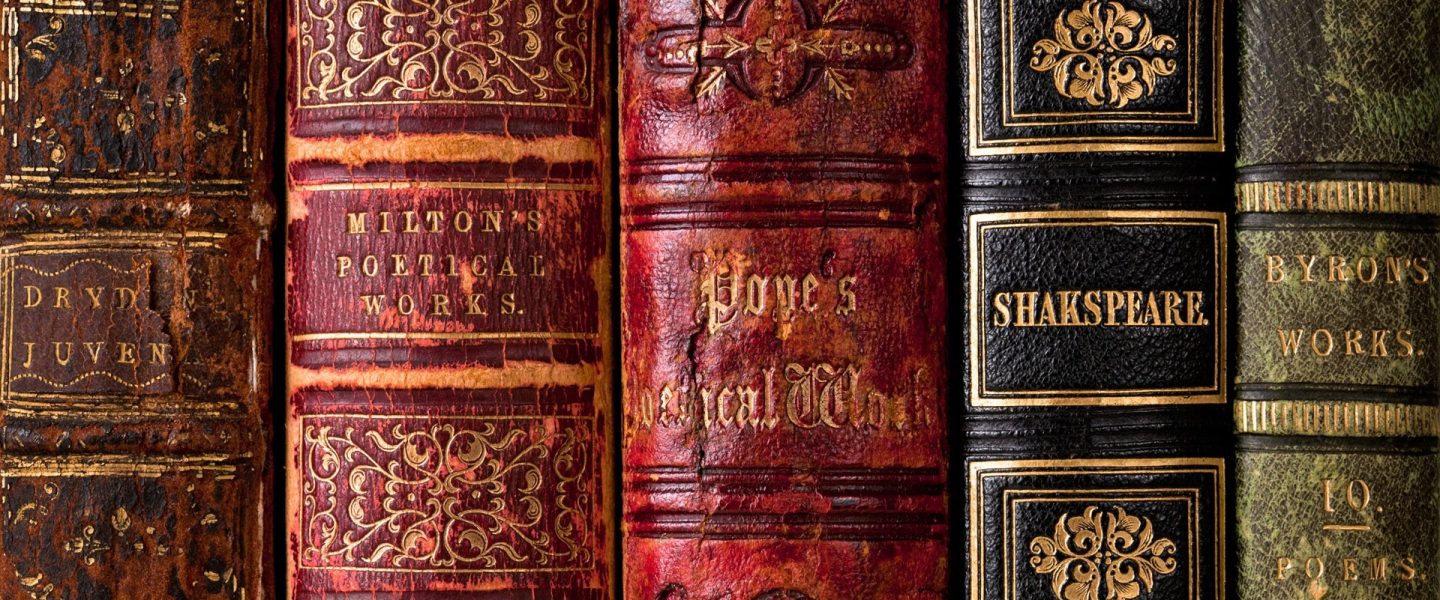
All this was very interesting, but it was his quote from Gary Snyder that really got my attention:  “In Western Civilization, our elders are books.”  What does this mean?  Does it mean that our books are our shamans, priests, wise men?  It surely discounts personal experience, oral history, and common sense.  And, if it’s true, it surely discounts the elders.  I had trouble finding the exact citation from Snyder when I went to look for the source, but I did find this in Snyder’s essay “Tawny Grammar”: “In this huge old occidental culture our teaching elders are books. Books are our grandparents!”  Think about that.

Before a general level of literacy, experience had real and appreciated value.  Elders had knowledge about the best time to plant the crops, best way to make a mattress, best chance to find a wife.  They were the repository of the history of a family, a district, a craft, a people.  Even when their bodies started to fail, they could provide expertise and counsel that was valued. In early (non-literate) cultures, the memory of the elders was a critical asset, a form of social capital. And it was largely the written word that changed this. 

What did an increase in literacy mean for the elderly?  It might have meant that other, often younger, members of the household – the children and grandchildren – could read the new broadsides and chapbooks that their elders could not decipher.  One could imagine that, rather than tales told around the hearth by the oldest member of the group (the member with the longest memory and the most to “tell”), the literate were now reading to the illiterate. For these reasons, communal value increased for someone who could read to the group or could manage the new insistence on written legal documents – usually the junior members of the group.  One might think about how we rely on the young to fix our computers or set up our smart TVs.

Is it good or bad that the books are our elders?  Not so good for the elders and maybe not always so good for the readers.  In many ways, books are an easy out for all of us.  We think we have the answers in our hand.  In the Bible, the beleaguered and bewildered Job says that he wishes that “mine adversary had written a book” – meaning that he would then be able to understand, anticipate, and solve his problems if he only had a book to tell him what he needed to know.  We all think the right book can solve our problems.

I am particularly guilty in this regard; the answer is always going to be in the next book.  I inherited this from my father, who was adamant that everything that one needed to know could be found in a book.   Sometimes though, the nuances are more subtle than words.  He once built a stone fireplace with plans from a book – and he was completely confounded when it didn’t draw well and smoked up the room.  An old chimney sweep was able to tell him where he went wrong – but a little too late.

There are many differences between advice from books and advice from elders.  There is the nuance and the dialectic of human interaction.  There is the sharing of emotion from one who is struggling and one who has put the struggles of youth and doing behind them.  Human beings can provide counsel for the heart that supplements the advice for the work of the hands or the brain.  And the testimony of the old people – especially when they speak of their youth – reminds people of all ages that, with good fortune, we will all be old some day and we might look to our elders for models.  Blake put it this way in “The Ecchoing Green”:

Old John, with white hair 

Does laugh away care,

Sitting under the oak,

Among the old folk, 

They laugh at our play, 

And soon they all say.

‘Such, such were the joys. 

When we all girls & boys, 

In our youth-time were seen, 

On the Ecchoing Green.’

Besides their advice and their memories, old folks like Old John provide models for aging to all who come in contact with them.

And now we are taking another step away from any such real interaction between generations with the advent of AI.  There was a story on the front page of the Sunday NYTimes last week about an elderly woman who gets an AI companion.  She shares her life, her stories, with the glowing machine.  This may be comforting to her – and I hope it is – but it makes me sad.  The machine can respond to her, help her organize her day, notify the proper people if she is ill, but it is a machine, an algorithm, a pricey way for families and communities to absolve some of their guilt for not being there.

Lent began this week.  With my husband recovering and a steady roster of doctors and therapists necessitating a complete change in all of our routines, we are experiencing our own kind of Lent, our own kind of renunciation.  We will learn in the process, and we might even turn to books for help and counsel.  But the kind of change in heart that such upheavals require are not fully relieved by the written word; the reassurance of those that went before is in facial expressions and kind listening.  AI may be able to listen, but it cannot wince or squeeze our hands in the appropriate places.  Neither can books.  Both books and AI minimize the value of individual experience, knowledge and judgment.  We have seen the results of this in recent years.   Not only are we losing the repository held by our elders, but we are losing confidence in our own experience and judgment and placing it in the hands of publishers, AI developers, content providers, media moguls, and spin doctors.  I love books and I don’t hate technology – but neither of those things is going to get us out of our current political dilemma or help me realign my world. 

I have written about books and AI in relation to old folks before. You could try my earlier blogs, Here Be Dragons or Charlotte Bronte, Luddites, and AI on artificial intelligence. On reading, you could look at Teach Your Children Well or Some (Unspoken) Thoughts About Reading Aloud. For a short story about what one generation has to offer another, you might look a “Any Help She Can Get.”