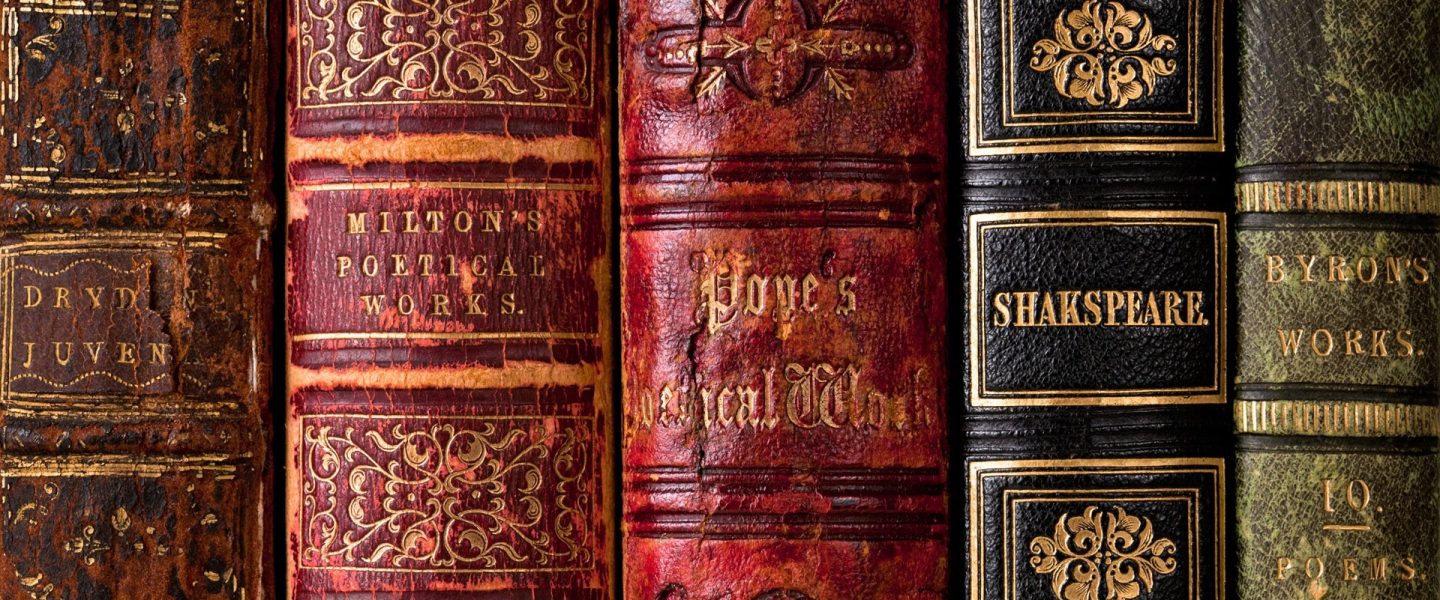
As I am writing this, it is the Autumnal Equinox, that moment when day and night are the same length, a pause in the steady progression to shorter and shorter days and the long night of the Winter Solstice. One metaphor that poets and philosophers have used for our life journey is that of the seasons – Spring for youth, Summer for adulthood, Fall for aging, and Winter for the end of life. Poets like these metaphors. I think of Chesterton’s “Gold Leaves”:
In youth I sought the golden flower
Hidden in wood or wold,
But I am come to autumn,
When all the leaves are gold.
And then there is Shakespeare’s Sonnet 73 (one of my favorites):
That time of year thou mayst in me behold
When yellow leaves, or none, or few, do hang
Upon those boughs which shake against the cold,
Bare ruin’d choirs, where late the sweet birds sang.
If fall is the beginning of old age, what does the equinox represent? An equanimous acceptance of aging headed for the final solstice of death? I just learned that Yom Kippur, the Day of Atonement – a time for reflection – was celebrated yesterday and always falls around the time of the Autumnal Equinox.
And that all got me pondering how we make sense of the stages and division of our lives. I have talked about this before in relation to writing a life review (“Feast on Your Life”). Such a pause can be a useful tool with which to try to make sense of our past (or to realize it makes no sense). What were the moments in your life that marked a new path? A birthday, a graduation, a birth, a death? Or was it something more mundane – when you started meditating, learned to play bridge, or went blonde?
How do we divide up our lives to make sense of them? By decades, seven-year spans, seasons, locations, occupations? Or are such divisions just arbitrary?
Augustine defined seven stages (famously reiterated by Shakespeare’s Jaques in As You Like It), which corresponded to the known planets, each life stage taking some of its characteristics from the planet under which it was situated. Old age was influenced by the distant Saturn, which was responsible for its being “cold and dry.” In literature and legend, there are examples of three, four, five, six and seven divisions of life. (Note: AI says that there are eight stages because it includes gestation as a stage – apparently, AI is a believer in personhood at conception.)
As I look back at my life from the age of 75, I can make all sorts of divisions. Moving always felt like a “new” stage, as did graduations, marriages, divorces, birth of children, major illnesses and surgeries, retirement – but these are circumstantial. Is there some kind of deeper division? Are the real makers far more private, more interior?
Are all such divisions artificial? Did they make more sense when we had more rituals to note and understand the transitions? Transitions are hard. Even if they are eagerly anticipated.
I recently read about the Fibonacci sequence in which each number is the sum of the two numbers before, a formula that makes a graceful spiral and is found over and over again in nature. The ratio of two consecutive numbers in the sequence gets closer and closer to something called “The Golden Ratio” or about 1.618. It turns out that many flowers have petals that correspond to such a number and it is a frequent descriptor of tree branching, water flow, and many more natural processes. Could we apply it to the stages of our lives? The sequence within the framework of any life would be 0, 1, 1, 2, 3, 5, 8, 13, 21, 34, 55, 89 – since the next number would be far above current longevity records, we will have to assume that the last stage begins at 89! In some ways this works for me – at 1, I learned to walk, to talk at 2, to read at 5, to swim at 8 – you see the possibilities. And I would also note that while the average lifespan in the US is in the high seventies, the median is in the low eighties, and the mode (the age at which the most people die) is close to that last Fibonacci number of 89.
But almost any sequence (7 years, 3 ages, 4 seasons) is worth using if it gets us thinking about what went on in our lives, what changed, what stayed the same. And in relation to my serenity project – when were we most calm, most content? And why? Was it circumstances that mattered or attitude? Such reflections are, I am told, where wisdom comes from.
Change both gives and requires wisdom; the world is changing at a frightening rate these days. It is important that our reactions be conscious, and looking at the past intersections of life might help.

What a rich post to sit with. Your Fibonacci experiment delighted me, mapping learning to walk, talk, read, and swim onto those widening intervals, and the mode of American deaths landing near 89 is a striking coda. The line that change both gives and requires wisdom stayed with me, along with the serenity project question of when we were most calm and most content. In my work building privacy-first home sensing technology, older adults keep teaching me something related: they know exactly how they want to live, and the best thing any tool can do is fit quietly around the routines they have spent a lifetime building, rather than asking them to change. Thank you for this one.
Hi Alex Qi! I too have been pondering the Fibonacci sequence – just a different way of looking at things which is always good. It sounds like you are very sensitive to your older clients – bless you! Two years ago my husband and I moved into a new (to us) house with an old security system – although we were assured it was “off,” it kept sounding at odd times until finally it roared at 3AM and my husband went down to the cellar and cut all wires to the central box. Luckily, he did not electrocute himself! We are left with all the hardwiring (including cameras indoors) to get rid of but…stay tuned. Ritual is, indeed, precious. It also frees the mind to think about other things when you don’t have to ponder the established routines of life. Thank you for reading my blog! And feedback is always nice! Be well!
Your kind reply made my day, thank you.