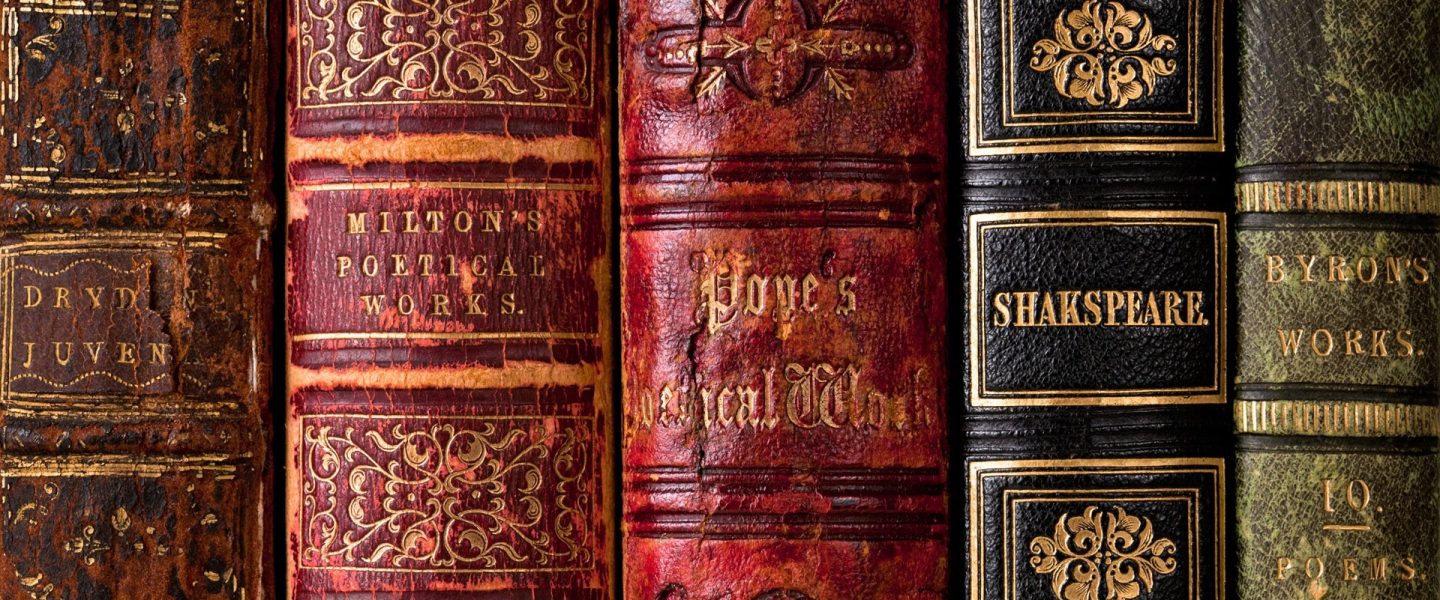
Old Age, Jonathan Swift, and Me

When I was in my fifties, I decided to finish my doctorate in English literature.  I was working in college administration as a Chief Financial Officer, and had accumulated a BA and MA in literature, an MBA, and completed various coursework and other prerequisites for a PhD but realized that I would need a year or two of full-time effort to complete coursework and a dissertation.  I had the good fortune of being able to do this, and I joined a small cohort of much younger students in trying to complete this hurdle (more on that cohort later).

I decided to research the changes (as I perceived them) in the portrayal of old age in literature during the Enlightenment era (sound impressive?), and I elected to do this through the lens of a writer who experienced an infamous old age himself, and who wrote his most famous book at about my age – Jonathan Swift.  During Swift’s lifetime, science was turning old age from a theological phenomenon to a pathological one; statistics of life expectancy were just beginning to be accumulated, and increasing literacy was displacing old memories as the source of history and information.  It turned out to be an interesting study (abstract found here).  Now, almost twenty years later, I find myself revisiting some of my conclusions and wondering if I would have a different perspective now.

I might have been middle-aged when I finished graduate school, but being thrown in with a cohort of twenty-somethings made me feel older.  I never felt that they were that much brighter than I was (although some surely were), but I was massively more effectual.  I turned papers in on time while my classmates had a sea of incompletes.  I got my dissertation chapters and rewrites to my committee faster than they probably wanted and had no problems ticking off the hurdles to getting to my final defense.  I researched all my own citations and even word-processed my final document myself (in compliance with the University’s picky standards).  Research and study were so much easier than working that it was during this period of time that I also started writing fiction.  It was a happy time.

The issues of aging I identified in Swift’s writing and in his life are still with us.  Gulliver’s episode with the immortal but aging Struldbruggs depict what happens when longevity outraces competence, when technology, language, and culture leave the long-lived behind.  The Enlightenment era saw the first spate of self-help books on extending one’s life span and the implied assumption that, perhaps, the length of your life span was within your control and not necessarily the total prerogative of the Almighty.  Swift himself lived to be 77, and before he died, he lost most of his friends, his lady-love Stella, and just enough of his mind that he had trouble communicating but seemed to be aware of that sad fact.  Swift was a difficult character all his life, but, as I age, I have more sympathy for him. When he was sixty-four, he wrote his own humorous elegy in almost 500 lines of rhyme, “Verses on the Death of Dr. Swift.”  The poem is hilarious and humbling.

Besides, his memory decays:

He recollects not what he says;

He cannot call his friends to mind:

Forgets the place where last he din’d;

Plies you with stories o’er and o’er;

He told them fifty times before.

How does he fancy we can sit

To hear his out-of-fashion’d wit?

Swift was not overly lovable, but how can you not have a soft spot for a man who looks so calmly into the face of the eccentricities of his own old age?  I ended up being fond of the pompous old geezer and was loathe to part with him when my academic work was over.

I turned some of my knowledge of Swift into a draft novel, What Shall I Say First?   In it, a middle-aged academic is visited by the ghost of the old Dean himself.  But again, this was written a number of years ago.  I may revisit that manuscript and my dissertation to see if, twenty years later, Jonathan Swift, Dean of Saint Patrick’s, has anything new to teach me.  Can old dogs teach old dogs? Stay tuned.  Meanwhile, read the Struldbrugg episode in Gulliver’s Travels (Part III, Chapter X) and see if you don’t relate to their feeling of being “foreigners in their own country.”

New Year’s Resolutions in Old Age

The title of my blog site (When I Come to be Old) comes from a list of Jonathan Swift’s resolutions, made when he was a young adult, about how he was determined to act (or more specifically not to act) when he was old.  His list is worth reviewing by us seniors, just to see how the younger set may perceive us (no comfort there).  This new year, however, I am more interested in thinking about what kind of resolutions old folks should make about themselves?

What kinds of resolutions should old people make?  If you do a search on the web, most of what you will find are suggestions to improve your mental or physical health: take up crosswords, walk at least a mile a day, eat more vegetables.  Yes, of course.  These are common sense maintenance items, and we all are fully aware that learning a foreign language will work our brain harder than watching Brit Box.  I surely make such resolutions, but they usually (in my case) take the form of the negative.  No more than an hour of TV per day, no dessert unless I have walked three miles that day, no more than one restaurant meal a week – and so on.  Games we play with ourselves which (hopefully) make us a little healthier without undue deprivation.

On my doctor’s suggestion upon my query about any possibility of avoiding my mother’s dementia, I have gone back to French. (I once knew enough to pass a translation exam for a graduate degree, but those brain cells seem to have disappeared.) I am using Duolingo and pledged myself to a modest fifteen minutes a day.  I don’t have to worry about reminders; Duo is a pest.  I also continually contrive and amend reading lists and rules (e.g., at least one literary work of fiction or nonfiction for every mystery novel).

But how about other hopes and goals other than those aimed at life extension?  There are at least a couple of other categories.  How about creative endeavors?  Not to be published or hung on our grandchildren’s walls, but for our own satisfaction in doing something which draws on our experience, something, perhaps, that we have always wanted to do.  Most of us know what that means for us – which could be anything from adventuresome cooking to bonsai gardening to a full-length novel.  Here, too, I have found it necessary to set concrete goals for an enterprise which is not concrete at all in its reason or its results.  When I first started to keep a journal over twenty years ago, my resolution was ten single-spaced pages per month – and if I put it off, I had to write all ten on the last day.  It never came to that – but since that time I have produced the minimum (usually far more).  Similarly, when I started a blog, it was with the determination to post a blog at least twice a month and a new story every six weeks.  I have succeeded, at least on the average.

But there are more personal ambitions to do with our states of mind – our souls, if you will.  One of my resolutions this year is to start going back and reviewing my journal from the beginning to see what I can learn about myself.  (See my blog, “Rules of One’s Own,” for the wonderful Marion Milner’s advice in this regard.)

And how about resolutions that have to do with the very fact that we are aging, facing changes we cannot (wholly at least) control, coming closer to the end, however we might define it?  “Do not go gentle into that good night” was a resolve, made not by an old man, but by a younger man (Dylan Thomas) on behalf of his dying father.  I don’t know about you, but I don’t want my children making resolutions for me.  And I don’t want to spend my last years in a “burning and raging” against the “dying of the light.”

Kay Boyle was already old when she formulated her “Advice to the Old (Including Myself).” Boyle, like Swift, warns us about not dwelling on old times or regaling others with our aches or disappointments – but she ends with a challenge to battle despair:

Have no communion with despair; and, at the end,

Take the old fury in your empty arms, sever its veins,

And bear it fiercely, fiercely to the wild beast’s lair.

This is a different kind of battle – not against inevitable death and age, but against self-generated despair, not against the reality of existence but against an antagonistic attitude toward what isFor me, it is not so much a battle (who wants life to be a battle?) as a matter of – resolution.

Resolution is a word with many meanings; at the new year, we often mean it in the sense of “firmness of purpose.”  But it can also mean the “solution to a problem” (as in “the dentist resolved my toothache”) or the “degree of sharpness with which we can see something” (think of the resolution level of your monitor or TV).  All the senses of resolution are related: firmness of purpose is only of use if we can see sharply enough to define the issue we are trying to resolve, and know what action on our part will “resolve” it.

Old age is, in itself, not a problem.  Grief or despair about the changes that old age brings can be a problem and is worth resolving.   But before we can resolve it, we must examine and define it.  Yes, bad habits can come with age and these need to be guarded against (just ask Jonathan Swift), but that is true of all times of life.  And again, perhaps the real sin is to despair at the facts of existence. I spent my childhood wishing to be older; I spent much of my middle age looking forward to retirement.  I am trying hard not to miss the opportunity to enjoy and make the most of my old age.  My resolutions will be to understand my own nature and changes (read the old journals), learn (French and patience, although not necessarily in that order), and work toward some form of resolution with age, provisional though it may be.

For a fictionalized account of a different kind of resolution, you might try “Nothing New.

Crowing Cocks, Barking Dogs, and Artificial Intelligence

I recently read Jeannette Winterson’s book on artificial intelligence (AI), 12 Bytes: How AI will Change the Way We Live and Love.  Winterson believes that comprehensive AI is inevitable (surely she is correct in this), but that the perfect “AI Mind” could be structured to be free of bias, prejudice, illicit or mercenary purpose.  This beneficent intelligence could replace God for us as the “all powerful” solution – or so hopes she.  Winterson produces little evidence that it is going in that direction – mostly she just scares me and makes me glad I am at the end of life, rather than the beginning.

As has often been noted, technology, in itself, is amoral, leaving it open to good uses and atrocious uses.  But it will be used.  John von Neumann warned us decades ago: Technological possibilities are irresistible to man. If man can go to the moon, he will. If he can control the climate, he will.  It is true that we have the atom bomb and have never used it since Hiroshima and Nagasaki– but that is a technology with obvious risks, while AI is much more subtle.  And seductive.

Winterson recommended Shoshana Zuboff’s The Age of Surveillance Capitalism, which I am currently reading. The question again is whether we control the technology or it controls us.  Zuboff tells us that “surveillance capitalism unilaterally claims human experience as free raw material for translation into behavioral data.”  And with the behavioral data, surveillance capitalists (think Google) can predict and manipulate our behavior – think of Skinner (ugh).   I am not happy with the thought of becoming “raw material” – it was bad enough when we were just “markets.”  Zuboff posits that we all have an “unbearable yearning” for the old world that is slipping away and gives us a Portuguese word of homesickness and longing to capture the feeling: saudade.   I have saudade– I imagine all old folks have it.  I have saudade for the way life used to be, and I have it increasingly as we race further and further from the world I grew up in – that imagined Eden.

The question that keeps being posed is: whether technology can be slowed down or redirected? As far as civilization and culture goes, technology seems to be a juggernaut.  No one seems to be willing or able to stop it.  But can an individual step aside?  Not easily of course.  There is still the need to interface with the computer to make travel reservations, with AI to get through to my doctor, with e-mail to keep in touch with children who seem to have forgotten that the postal service exists.  But can we carve out a place where we, at least, do not feel assaulted?  Our virtual Walden where we are not checking for messages or responding to beeps all day long?  Winterson herself has written forcefully about taking the importance of asking the question  ‘How shall I live?’ and describes that question as being “fierce.”  It is.

The premise that we do not have to use all the technology that is invented and marketed sounds self-evident, but it is not that easy.  Like Swift’s ancient Struldbruggs, we soon feel like we are not speaking the same language as those around us.  What is the answer?

The answer, for me, is that I do not speak the same language anyway.  And in my more pessimistic moments I think of another quote from Von Neumann’s discussion of how humans will use the technology at their disposal: It is just as foolish to complain that people are selfish and treacherous as it is to complain that the magnetic field does not increase unless the electric field has a curl. Both are laws of nature.

 And yet, I still have hope.  There is the model of the Tao.  I post the eightieth section of the Tao here (“Crowing Cocks and Barking Dogs”).  Written two and a half millennia ago, the Tao addresses technology, over-population, peace:

A small country has fewer people.

Though there are machines that can work ten to a hundred times faster

     than man, they are not needed.

The people take death seriously and do not travel far.

Though they have boats and carriages, no one uses them.

Though they have armor and weapons, no one displays them.

Men return to the knotting of rope in place of writing.

Their food is plain and good, their clothes fine but simple,

     their homes secure;

They are happy in their ways.

Though they live within sight of their neighbors,

And crowing cocks and barking dogs are heard across the way,

Yet they leave each other in peace while they grow old and die.

One is reminded of some fictional utopias – notably those of William Morris and Samuel Butler – where technology is suspect and carefully controlled. In Butler’s Erewhon, society determined to make the cut-off point for technology 271 years before the present time.  The Amish sometimes use newer technology (like phones) for business, but not for other parts of their lives.  Why does it seem so difficult to do this in our own lives, especially since older people do not have to face the demands of a job or career?  At least, we  might disregard the machines that “are not needed” and the absence of which might contribute to our peace as we “grow old and die.”  I know, easier said than done.  Any assistance in where and how to draw the line would be greatly appreciated by this old lady.

If you would like to look at a piece of my fiction that considers the challenges of technology to life, you might try “Two New Apps.”

Planned Obsolescence – Appliances, Knowledge, People

We just had a lesson at our house about planned obsolescence.  After struggling to replace a range in a width no longer manufactured (one form of planned obsolescence), we finally gave in and had a new kitchen counter put in to fit a standard size, then bought a new range.  Three years later, the warranty had expired and so had something in the oven, for it now had no idea when to stop heating – rather scary.  Unplugging it and forcing a computer reset worked for a while, but soon there was no controlling the demon machine.   Because computer boards were involved, the cost of fixing the “new” range was $600 – just a few hundred dollars less than we paid for it.  Our repairman sympathized and told us (after the fact) that we should have just kept repairing the old range, which – although twenty years old – was probably superior in every way to the new one.  We have all been told this about cars, refrigerators, dishwashers – and yet…

Even knowledge seems to have an expiration date.  Like many of our generation, I spent most of my working life learning to use new computer programs – programs for communication, finance, planning.  I would just begin to feel proficient with a new system, and another one (better, faster, and supposedly necessary) would come along.  One of my greatest joys on my last day at work was to put that all behind me – or so I thought.  Little did I know that even in my old age I would have to learn how to use social media, stream movies on my smart television, and deal with the replacement of real people with AI in almost all my encounters outside the home.  For the very old or computer-averse, life is very difficult these days.  From the outside, we are also an example of planned obsolescence, time-dated from the previous century.  Not a pleasant feeling.

All of which reminds me of two elderly characters from literature – one from Gulliver’s Travels (almost three centuries ago) and one from Fairy Tale, the most recent novel of Stephen King.

In the third book of Gulliver, we find the heroic Lord Munodi, who counts himself among the “very few, such as were old and wilful, and weak like himself.” These “old and wilful” are not caught in the movement to put “all Arts, Sciences, Languages, and mechanics upon a new Foot through an ‘Academy of Projectors.’” But, “that, for himself, being not of an enterprising Spirit, he was content to go on in the old Forms.”  For his recalcitrance, and despite earlier service to the government, the aging Munodi is “universally reckoned the most ignorant and stupid Person among them.”  Munodi is pressured to tear down his gracious and functional house to make way for the more modern, and to replace time-tested farming methods with new ones that deplete the soil.  But under the pressure of science and technology, he knows he will lose and is just trying to hang on to what he can of the old world until he dies.  His is a sad and hopeless case. Later in Gulliver, we meet the immortal and pathetic Struldbruggs, who have fallen so far behind the times, so obsolete, that they can hardly understand the language spoken around them; they have become “foreigners in their own country.”  I think I know how they felt.

In the first portion of Stephen King’s latest fantasy, Fairy Tale, we meet Mr. Bowditch, who is very old indeed, and lives with his ancient dog Radar in a rundown Gothic house.  Since he keeps to himself (think Boo Radley), scary myths about him abound.  The main character, a young man named Charlie, finds himself in Mr. Bowditch’s story.  The novel is too large to talk about in depth here (and I don’t want to give any spoilers), but what Charlie discovers – to his own awe and incredulity – is that not only does Mr. Bowditch not have a cell phone or a computer, but he has a television with vacuum tubes and does most of his business (including ordering new tubes when the television malfunctions) by mail and without a credit card.  Charlie is mystified: Mr. Bowditch is perfectly happy with things as they are.  I loved Mr. Bowditch.  But Charlie is never quite persuaded that, perhaps, there is much value in longevity – of things or people.

This is how Wikipedia defines planned obsolescence: “The rationale behind this strategy is to generate long-term sales volume by reducing the time between repeat purchases (referred to as ‘shortening the replacement cycle’). It is the deliberate shortening of a lifespan of a product to force people to purchase functional replacements.” We are in an era of such comprehensive and rapid planned obsolescence that people begin to feel obsolete too.   I don’t know about you, but whether I am capable of adapting or not, I do not want to spend my remaining years trying to figure out new ways to listen to my favorite symphony or communicate with my bank or carry on a conversation with my grandchildren.  Or repairing appliances.  But it doesn’t look like I’ll have much choice.

If you want to think about what refusing to accommodate unrelenting change might look like, you might try my story, “Nothing New,” or my earlier blog post, “Possessing That Which Was Mine.”

Covid-19 and the Generational Wars

There has always been a generational divide. In our hippie days, we called it a generation gap, but it was more than that. We didn’t trust anyone over thirty. As our baby boomer generation came into adulthood, moved into jobs, then into better jobs, and finally into collecting pensions, social security, and artificial hips, our children and our children’s children started to worry about who was going to pay for all this. These economic fears were on top of the more individual problems of who was going to go stay with Mom when she had her cataract surgery and how to get Dad’s driver’s license away from him.

In some ways, this is nothing new. When Jonathan Swift wrote Gulliver’s Travels, he included the incident of the Struldbruggs, a select group of people who would never die. Their culture did not see them as a source of wisdom, but rather as an economic problem. Their society finally decided to declare them “dead” at the age of eighty, allowing heirs to inherit, taking away their right to vote, and leaving them alone to age while the world went on without them. This just as longevity was starting to increase in the Early Modern world. The younger generations first saw the “baby boomers” hold on to the limited upper-level managerial and professional positions. Then they realized that the retirement of the older generation (us) will be funded by the younger (through the Social Security system, Medicare, and other ways). The economic gerontophobia (yes, there is a word for it!) that Swift outlines is alive and well.

Then, as now, the elderly represent at least three threats. There is the threat that the old will not relinquish control and that their inability to keep pace with change and to release capital will impede progress. Then there is the seemingly contradictory threat that they will have to be supported (both economically and emotionally) in their old age. And finally the very presence of the aged is a memento mori, a threatening reminder of decay and mortality in a culture which does not want to think about these things. This unease is fueled by endemic expectations of scientifically produced and ever-increasing longevity, and juxtaposed with the hopes of the youth that technology will mean that they might, themselves, live long but never get old.

And now we have Covid-19, which is more of a threat to the old, but less of an inconvenience (we mostly don’t have jobs anyway and everyone knows we don’t go out much), and less of a threat to the young and more of an inconvenience (who mostly do have jobs, and may have young children in the house, or could still be looking for partners). I know the young can get Covid-19 and suffer greatly from it, but in Italy 95% of the deaths have been in those over 60 and 84% in those over 70. In the United States, 78% of the deaths have been in those over 65 and 92% in those over 55. Those are alarming statistics for the old, but perhaps empowering for the young.

When these younger folks were our children (or grandchildren), we gave them curfews and told them they couldn’t go to Florida on spring break. Quarantine rules must feel like déjà vu to some of them. How does this all play out? And back to our youthful distrust of anyone over 30. Are we reaping what we have sown?

I wrote an earlier post about whether the old could teach the young anything “(Teach Your Children Well?”), or whether everything had to be learned anew with every generation. Still a good question. In old England, even before Swift’s time, there was an instructional story of a man who made the decrepit old grandfather eat from a trough. One of the young children in the family starts building something, and the father asks what it is. “It’s a box for you to eat out of for when you are old like grandfather,” says the observant child. Thereafter, the old grandfather is treated better. But I am not sure that young people really believe that they are going to get old. Maybe, like our own death, it is too hard to believe. Or maybe we have all gotten too used to thinking in the short term.

Over a decade ago I wrote a novel, The Last Quartet (nod to Beethoven), about a situation that is the exact opposite of what we are facing. In a horrible epidemic, it is the old who survive and have to carry on with the world. I have posted the “Prelude” to this novel here. It is a thought experiment which might be of interest at the moment.

To start thinking about how our view of the aged has changed in the modern world, you might look at the abstract of a dissertation I wrote about the changes that started about the time that Swift invented the poor Struldbruggs.


Lists: Reading About Old Age

Over the next few weeks, I am going to post some lists of books, articles, poems, and other works about old age that I have found helpful (and fascinating) in trying to comprehend old age. I am interested in understanding both the evolution of how we regard old age and the variety of individual stances regarding senescence. I compiled these lists (sometimes with assistance) for a variety of purposes: research for my dissertation on aspects of the literature of old age (which particularly explored changes engendered by the Western Enlightenment project), reading lists for Great Books and senior groups, reminders of works I would like to read or re-read. There are texts that I have discovered and loved which have old people as predominant characters, and works that were written by fairly old people. There is a mixture of genre in these lists: fiction and non-fiction, classics and science fiction, plays, poems, and essays. I even include some works of art and musical compositions – think of Beethoven’s late quartets!

There are, of course, some good anthologies of works about old age. There is, for example, Helen Nearing’s Light on Aging and Dying. If you are of my generation and remember fondly Helen and Scott Nearing’s book on Living the Good Life, you might also enjoy her book about Scott’s death, Loving and Leaving the Good Life. Wayne Booth compiled a wonderful anthology with commentary entitled The Art of Growing Older: Writers on Living and Aging. Harold Bloom gathered his favorite “last poems” in 2010, in a rich volume entitled Till I End My Song. Bloom’s musings are almost as good as the poems. And there is the wonderful Helen Luke’s meditations on literature and late life in Old Age: Journey into Simplicity. But these compendiums are only a start.

I also seek out works by older authors. I have been very young, but I have never been very old (getting there fast). I want to know what those ahead of us have to tell. For example, I just finished (and would highly recommend) Amos Oz’s Judas, which he wrote in his mid-seventies and wherein one of the principal characters is also of that age. I will put together such a list of books by old authors about… living while old.

I have my favorites – most of which I have noted here before. There is Vita Sackville-West’s All Passion Spent, about the old gentlewoman (Lady Slane), whom I would like to be in my extreme old age. There are the poems of the old ages of Robert Frost, Wallace Stevens, and Thomas Hardy. There are the journal entries of Ralph Waldo Emerson’s old age. We need not go through it alone.

I am posting today the extensive bibliography for the dissertation I finished a number of years ago, which was entitled “Foreigners in Their Own Country”: The Struldbruggs and the Changing Language of Aging in Swift’s World. It is an interesting list because it spans the history of Western literature on aging, up to and including the era of Jonathan Swift. If you have not read (or do not remember) the Struldbrugg section of Gulliver’s Travels, please go back and find it! (It’s in Book 3.) If you read Gulliver when you were young, you probably will react a little differently now to this episode about the extremely old. On this list I would especially recommend the works from the Greek and Roman world and the late Middle Ages/Early Renaissance. Of particular note would be Cicero’s “On Old Age,” Langland’s Piers Plowman, Chaucer’s “Pardoner’s Tale,” and Gower’s Confessio Amantis. For a look at some of the earliest books on living a long life, one could take a peek at Cornaro’s Art of Living Long or Cheynes, Essay of Health and Long Life. Luigi Cornaro died at the age of 100 in the sixteenth century; Cheyne was a physician in the early eighteenth century with an eager audience for advice on longevity.

I have also posted the abstract from my dissertation so you can see the territory I was exploring. When I researched and wrote it, I became convinced that the Enlightenment and western faith in science changed the way we look at the cycles of life; I have not significantly altered my opinion. (More on that later.) And I closely reviewed much material at that time. And yet, as I grow older, there is still much that surprises me about senescence, both individually and culturally. These lists are just a way to put material out there for others exploring this new (old) territory. Next time, I will post some lists for book groups (for seniors and potential seniors) and talk about my experience in that regard.

The Mirror of Age

There is a footnote in Freud’s essay “The Uncanny” which all of us can identify with:

I was sitting alone in my wagon-lit compartment when a more than usually violent jerk of the train swung back the door of the adjoining washing-cabinet, and an elderly gentleman in a dressing-gown and a traveling cap came in. I assumed that he had been about to leave the washing-cabinet which divides the two compartments, and had taken the wrong direction and come into my compartment by mistake. Jumping up with the intention of putting him right, I at once realized to my dismay that the intruder was nothing but my own reflection in the looking-glass of the open door. I can still recollect that I thoroughly disliked his appearance.

First, we must remember that Freud has defined “uncanny” as the “mixture of the familiar and the eerie.” And, in this case, it was his own image as an “elderly gentleman” that was uncanny. And so, perhaps, it is with old age. The face is familiar but the transformation can sometimes be…eerie. I think part of it is because when we look at our own faces in the mirror or at the faces we love, we see a vision anchored to the past. It is only when we unexpectedly identify ourselves as a stranger that we can see what we really look like to others.

The old face in the mirror is a familiar motif –we see it in poetry. In both Robert Graves’ “Face in the Mirror” and Thomas Hardy’s “I Look into My Glass,” the poet contrasts the visage he sees with how he feels inside. Graves is puzzled:

I pause with razor poised, scowling derision
At the mirrored man whose beard needs my attention,
And once more ask him why
He still stands ready, with a boy’s presumption,
To court the queen in her high silk pavilion.

Hardy is more outraged as he views his “wasting skin” and wishes his heart would also waste away:

But Time, to make me grieve,
Part steals, lets part abide;
And shakes this fragile frame at eve
With throbbings of noontide.

For babies, the “mirror stage” starts a process of physical identity. For the aging person, the mirror may serve as an agent of disintegration rather than integration; a secure sense of the physical self developed when young – and as young – is displaced by the changing body in the mirror: “The I or ego which is developed in the mirror stage of infancy is structured precisely to resist the anxiety of bodily fragmentation. In old age, with one’s position reversed before the mirror, the ego finds it more difficult to maintain its defenses” (Woodward, Aging and Its Discontents). Fragmentation rather than integration – no wonder we are disoriented.

Still, we have wonderful self-portraits of artists like Rembrandt in their old age. A triumph of the spirit looks out of Rembrandt’s wrinkled eyes. I have lasted, Rembrandt seems to say, despite and because of this old, battered body. We know Rembrandt used a mirror for his many self-portraits. Clearly he came to terms with what he saw. Such self-examination is not easy, but I think it would be a worthwhile exercise.

The old, deaf, and presumed mad (I’m not so sure) Jonathan Swift, upon being led across a room in his dotage, caught sight of himself in a mirror and cried out “O poor old man.” And so cry we all. But, near the very end, Swift was found rocking himself and muttering “I am what I am, I am what I am.” There is a truth in the mirror. We can deny it, but it is part of who we are and it cannot be rejected anymore than can the self/soul that peers out of the reflected eyes.